Photography And Half-Thoughts By Mitchell Hegman

...because some of it is pretty and some of it is not.

Thursday, February 7, 2013

The Economy Must Go Through Bad-Good before Becoming Good-Bad


Due to a recent mental illness, I have been following the stock market—the Dow Jones Industrial Average if you prefer to be precise.  Prior to following “the Dow,” I tried following my 40 pounds of cat around the house—which only led me to bump my head against chairs and the legs of various tables in my home.
When I say that “I have been following the stock market,” what I actually mean is that I try to see what number is affixed to the average (value) at the end of the day.  I once surfed the net all the way to Wiki to figure out what the average really meant.  I discovered that the stock average is determined by averaging the price of the stocks listed in the market (30 of them) and dividing that by something called “the divisor.”  The divisor sounds pretty nefarious to me—something akin to an Arnold Schwarzenegger movie character—but is in fact a construct intended to accounted for mergers, acquisitions, ice cream breaks, and some malfeasance.
Judging by the value of my stock portfolio, however, not all malfeasance has been ferreted out.
Anyhow, the average value of the 30 commonly-traded stocks and the divisor grapple on the market floor throughout the trading day.  A graph plots the gaudy mathematical actions.  At the end of each day the final number tells you about the over-all health of stocks and, in some respects, the economy.  To be honest, all I know is that a big number is good and a little number is bad.  The number for yesterday was 13,986.52.  That is a very good number.  Near as I can tell, the Dow reached 500 the year I was born.  Hula-hoops and big fenders on cars were popular then, too.
Probably, that is enough for me to know.
Part of my “following the market” involves watching well-dressed men and women on CNBC talk (argue) about the economy.  The market is divided into two sorts of people: bears and bulls.  Bears are nay-sayers and sellers and sitters on stocks.  Bulls surge ahead, invest in stocks, and are positive in their view.  CNBC has a mix of bears and bulls.  One fellow may like a particular government mandate on energy while the next woman decries it.  Government spending here may be good, while there it is considered bad.  One poor fellow pretty much says only “I like natural gas” every day.
The other day, I watched a stockbroker and a correspondent fiercely argue over a fraction of a percent on jobless claims.  We seem always bumping up against bad-good or good-bad in the economic indicators such as unemployment and gross domestic product.  I have yet to see anyone assure me of firm footing.      
Two days ago, however, one of the men on CNBC said that he did listen to the economists or pundits…he just worked hard and tried to do what he felt was correct in the stock market.  He said he never lost assets in the long run.  He suggested that hard work and honesty are always rewarded in the long haul.
If I could remember his name, I would follow him rather than the market.  Or I may go back to following my cats.

--Mitchell Hegman

Wednesday, February 6, 2013

The Facts of Love


Below is a list of ten fairly scientific “facts” about love.  Well, only three of them are anywhere near facts.  The facts are thanks to an article written by Judy Dutton based on an interview with Dr. Helen Fisher of Rutger’s University.  Dr. Fisher has spent an entire career attempting to scientifically understand love.  The seven bogus facts are of my own invention, though often researched extensively for inaccuracy. 
See if you can pick out the correct facts.  The three correct answers will be listed at the end of the blog:
1.      If given a chance to choose between two particular type fonts when writing business letters, Verdana or Elephant, studies have revealed that people in a relationship are five-times more likely to choose Elephant than those who have recently endured a breakup.       

2.      People who are in love are more likely to wear mismatched socks.

3.      Feelings of love trigger the release of dopamine in the brain—resulting in something akin to a cocaine high.

4.      The average person falls in love only three times in a lifetime.

5.      Everybody loves a duck.

6.      People who are recently smitten by love produce serotonin (a neurotransmitter that helps relay messages from one section of the brain to another) at the levels often associated with people suffering from obsessive-compulsive disorder.

7.      Men fall in love faster than women do.

8.      Everybody loves broccoli.

9.      Intense love lasts no more than one to three years.

10.  Contrary to popular myth, men do not base their initial attraction to a woman on physical attributes alone.

--Mitchell Hegman

Correct Answers:  3, 7, and 9
For the rest of the answers: fall in love or surf the net.
To see the article mentioned here:  http://www.chemistry.com/datingadvice/LoveExplained

Tuesday, February 5, 2013

Juniper Ghost and Wounded Sky


The Name of my blog is The Sky is my Garden for a reason.  The sky—as I said in my very first blog entry on January 3, 2010—is a moving garden.  Every day the sky is brand new.  The drama of sunrise and sunset rarely finds a parallel.
Today, I am posting another of my older sunset photographs.  I purposely flashed the dead juniper in the foreground to “splash” the stark branches against the blue clouds.  In the distance, the sky above the Rocky Mountains has blushed red.    
--Mitchell Hegman

Monday, February 4, 2013

Accuracy


During a conversation about craftsmanship, a carpenter friend of mine told me about his first day working for one of the more successful framing companies in our valley.  The boss put him scrambling on the trusses of a house roof system they were sheathing.  He noticed that, each time he called down with his measurements for cuts on the wafer-weld sheets, the fellow sawing the sheets on the ground below would scowl when I called out something like “thirty-two inches and three sixteenths.”   Finally, after he yelled down from the roof for a new cut at forty-five and nine sixteenths, the man on the ground bellowed: “We don’t do teenths!  We are framing.  This is not finish work!  Give me a half or give me a quarter!”
They were very fast and did not see a necessity for undue accuracy in framing.
My friend quickly moved on to doing his own work and developed a finicky framing style that I greatly admire; I hire him without ever asking for a price when I need help with something.  He told me regarding his “persnickety” concern with sixteenths in framing that “a sixteenth in the basement can blowout to being a half-inch out by the time you get to the roof.”  He added. “You will fight it the whole way there.”
At least the framing crew was using the same measurement scale on their tape measures.
Perhaps you recall the famous miscalculation on 1999 Mars Climate Orbiter where the guys on the ground (Lockheed) calculated thruster force in terms of pound-seconds while the guys on the roof (the Jet Propulsion Laboratory) thought the craft thruster stuff was in the metric units of newton-seconds.  I don’t know the first thing about newtons, but this sounds pretty bad.
Near as I can tell, one pound is equivalent to 4.4ish newton.  The miscalculation translated into the craft pushing itself about 60 miles off course after a 416 million mile journey on a trajectory that looped the craft all the way around the sun to intercept Mars on the opposite side of Earth.  Certainly not close enough for guys nailing together a home—a lot of caulking would be required to seal that gap.  The Climate Orbiter stopped communicating while attempting to insert into orbit around Mars and is thought to have either disintegrated or skipped hard against the Martian atmosphere and then tumbled off toward the sun, disabled.
By the way, technically, Mars is ever changing in direct distance from Earth.  Though the two planets orbit the Sun in the same direction, Earth is on the inside track and nearer to the Sun.  We have a much shorter year and essentially lap Mars on the inside every 780 days.  When the two planets are in opposition (on opposite sides of the sun) they are about 249 million miles apart (measured in a straight line).  This translates into 225 million kilometers for those of us interested in further complicating this matter.  Additionally, if you measure from Mars to where my cat (20 pounds worth) lies on the floor of my sunken living room, the distance would be 249 million miles and roughly 1½ feet.   In 2003, while on the same side of the sun, Mars and Earth found themselves a mere 56 million miles apart.
In my years of construction, I have seen all manner of measurement errors.  I once worked on a nursing home where the plumber stubbed all of his pipes up in the poured-concrete floor of the center hallway—missing the walls by almost a foot.  Some of his pipes landed in doorways.  A laborer spent about five weeks on a jackhammer busting-out concrete so the new plumber they hired could fix that one.  I also know of a gymnasium in a small town on Montana’s Hi-Line (Highway 2) that was constructed a full two feet longer than drawn on the blueprints due to a measurement error that started with the concrete cast in the initial hole in the ground.
In horseshoes a few inches can be close enough to win the game.  A bullet zipped anywhere within arm’s reach of you is far too close.  On the other hand, the remote for your television, if only six feet away, is much too far.  I once worked on a 10 megawatt generator that rotated on a 14-inch shaft and weighed dozens of ton.  The tolerances on that required accuracy within 2 or 3 thousandths of an inch.   
Accuracy is relative. 
Just the same, should you ever find yourself needing either a framing carpenter or rocket scientist to help you with a project, you might establish early in the undertaking that the craftsman you hire is interested in teenths.       

--Mitchell Hegman

Click here to see Mars and Earth orbiting the Sun:  http://www.windows2universe.org/mars/mars_orbit.html

Sunday, February 3, 2013

The Stranger Also Smoked Cigarettes


I woke directly from a dream again this morning.  In this dream, I had started smoking cigarettes again.  I sat smoking them in a bar while drinking beer from a mug.   While smoking, I was chatting with the bartended (someone I seemed to know) and a stranger seated next to me.  The stranger also smoked cigarettes.
I told the stranger about someone I knew only a little who had lived his whole life through with no close friends and no meaningful relationships with women.  I sucked on my cigarette, exhaled, and then added: “He lived his life as if he were passing through the inside of a straw while surrounded by the rest of us.”
The stranger drew in on his cigarette.  The end of it glowed like lava.
That’s when I woke.
I lay in bed for a while thinking about that last thing I said in the dream.    
--Mitchell Hegman

Saturday, February 2, 2013

Big Sky Country, Calamity Jane, and Castle City


A couple of years ago, a late winter drive took a co-worker and me to White Sulphur Springs, Montana.  The highway from Townsend to White Sulphur Springs ascends the Big Belt Mountains through the ever-twisting Deep Creek Canyon and then delivers you onto high-altitude rangelands.  There are points, when driving across this open land, where you can see the Big Belt Mountains, the Little Belts, the Castle Mountains, and the toothy peaks of the Bridger Range in one expansive radius around you.
The ghost town of Castle can be found in the Castle Mountains.  A silver rush mining town, the small burg formed in the 1870s and rapidly grew to something near 2,000 residents.  Purportedly, the town supported seven brothels and over a dozen saloons at the peak of mining operations.
And, yes, one jail. 

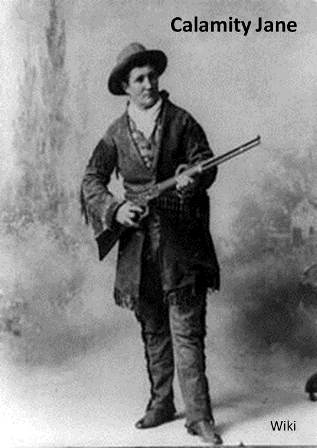
For a time, Calamity Jane (Martha Jane Cannary Burke) resided in Castle.  A professional scout, notorious drunkard, ox team driver, part-time prostitute, inn keeper, kindly nurse for the sick, and always unsettled frontierswoman—Calamity Jane lived in several other Montana towns over the course of her life.  She is best known for her association with Wild Bill Hickok and Deadwood in the Black Hills.  The town of Castle saw its demise when the silver market collapsed in 1893.  The town now (on private property) rests in silence.
Today, in addition to Calamity Jane and Castle, I am posting a photograph of clouds spilling over the high rangeland.  I captured the photograph after emerging from Deep Creek Canyon.  As I took the picture, I marveled at how fast the clouds were drifting over me.  The photo very nearly captures the motion.
I swear, this really is big sky country.    
--Mitchell Hegman

Friday, February 1, 2013

A Simple Rule


I try to live my life by simple rules. One of them is this:

If there are monsters in the water, I drink wine.

--Mitchell Hegman